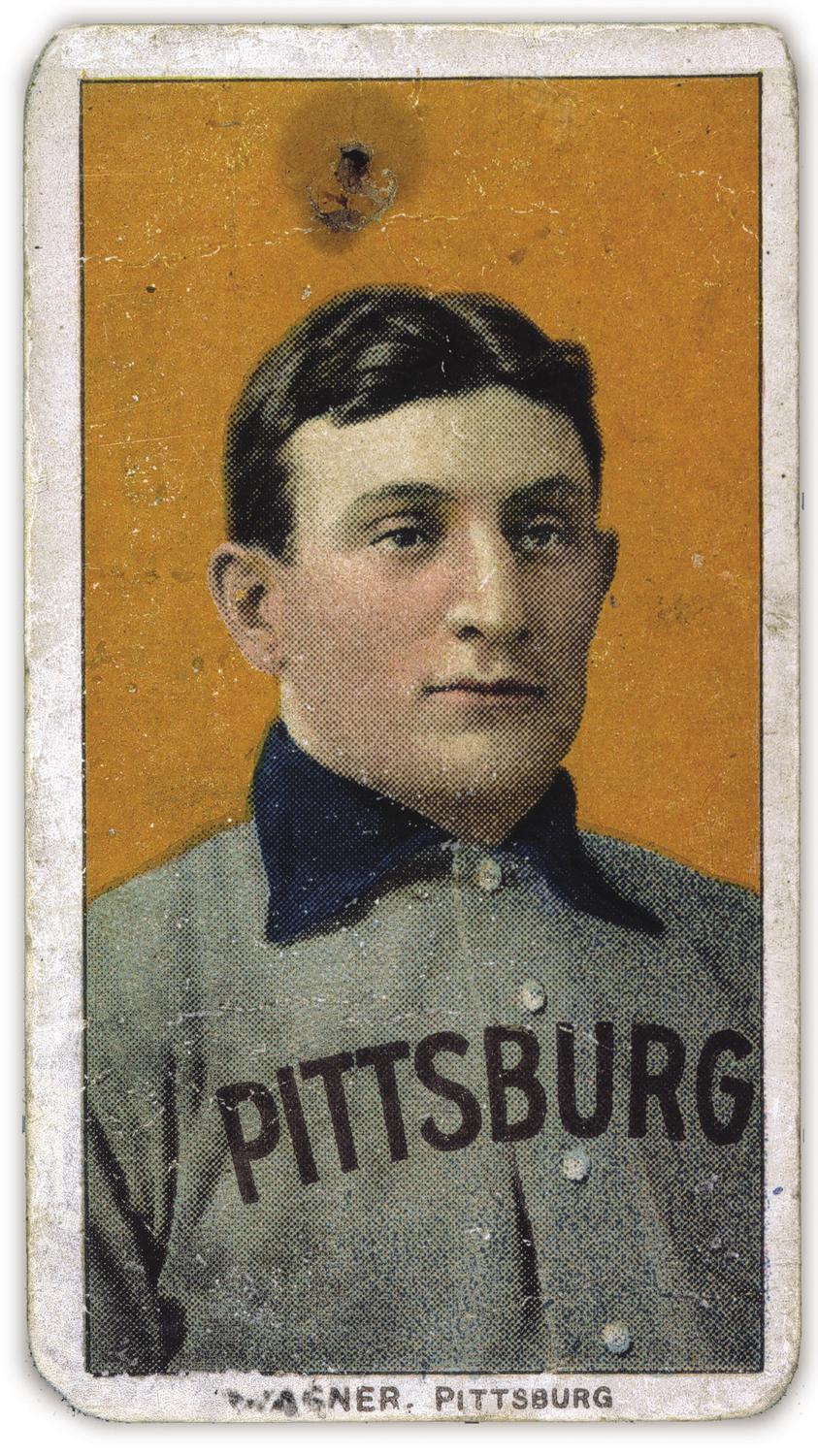
The T206 Honus Wagner is considered the Holy Grail of baseball card collecting, and for good reason. Its extreme rarity, the legendary Hall of Famer pictured on the card, the mystery surrounding its origins, and record-breaking auction sales have made it one of the most famous and sought-after sports collectibles in history.
But what makes this century-old baseball card so special? Let’s explore the history of the T206 set, the story of Honus Wagner himself, the mystery behind the card’s scarcity, and the famous copies and record-breaking sales that continue to capture the attention of collectors and popular culture today.
Wondering what your collection is worth?
Get an independent appraisal of your sports cards and memorabilia from Michael Osacky.
The T206 Set: Where the Story Begins
The T206 baseball card set, issued between 1909 and 1911, is one of the most famous tobacco card sets in history. In the early 1900s, baseball cards were an afterthought. Cigarettes and tobacco products were the big draw, and large tobacco companies were always looking for new ways to drive revenue and increase brand engagement.
One idea that “landed” was inserting baseball cards into cigarette packages and boxes. Parents could buy cigarettes for themselves and get a baseball card to give to their children, neighbors, or friends. Most of these cards were simply thrown away because cigarette buyers had no use for baseball cards and didn’t consider them valuable.
What’s Included in the T206 Baseball Card Set?
There are 524 cards in the T206 set (the master set is different). For most collectors, however, the set is considered complete at 520 cards. That’s because the remaining four cards (Honus Wagner, Eddie Plank, the Sherry Magie error, and the Joe Doyle N.Y. Nat’l error) are so rare and expensive that they prevent most collectors from completing the entire set.
Some of the set’s distinguishing characteristics include:
- Hall of Fame players: The set features numerous Hall of Famers, including Ty Cobb, Christy Mathewson, Cy Young, Walter Johnson, and Nap Lajoie.
- Card dimensions: Each card measures approximately 1 7/16 x 2 5/8 inches.
- 16 advertising backs: There are 16 different advertising backs associated with the set, each featuring a tobacco brand or advertising variation. Some backs, such as Piedmont and Sweet Caporal, are the most common and therefore typically carry less value than the scarcer, rarely found backs.
There are numerous “master set” collectors who aim to find every card with every available advertising back. It’s an onerous task that requires patience, connections, and lots of money. Finding a rare back, whether on a common player or a Hall of Famer, is no easy task.
Why Is the T206 Set So Collectible?
The T206 baseball card set is widely considered one of the top three sets in the hobby, alongside the 1933 Goudey and 1952 Topps baseball sets.
There are several reasons why it consistently ranks among the most desirable sets to collect:
- The Honus Wagner card: The set includes the legendary T206 Honus Wagner, one of the rarest and most valuable baseball cards in history.
- The size of the set: It’s a monster set to collect (520 cards for a standard set, but more than 1,000 if you’re trying to assemble a master set).
- Vibrant artwork: The cards feature colorful portraits and illustrations that make them instantly recognizable more than a century later.
- Scarcity and challenge: Collecting the different advertising backs adds another layer of difficulty, especially when searching for rare backs featuring common players or Hall of Famers.
- Affordability: Despite the set’s reputation, many low-grade common cards can still be found for under $50, making T206 collecting accessible to collectors with different budgets.
Who Was Honus Wagner?
Honus Wagner played for the Pittsburgh Pirates from 1900 to 1917, helping the team win the 1909 World Series and earning his place as one of the greatest baseball players of his era.
Wagner was an eight-time batting champion and four-time National League RBI leader. (The All-Star Game hadn’t even been invented when Wagner graced the baseball diamond!) He finished his career with a .328 batting average, making him one of the top hitters in baseball during the early 1900s.
In 1936, Wagner was among the first five players inducted into the National Baseball Hall of Fame, cementing his legacy as one of the game’s all-time greats.
The Mystery Behind the Card’s Scarcity
We know that Wagner’s card was pulled from production early. This is immediately evident in the PSA population reports, which show just how few copies have survived compared to other cards in the T206 set. But why was production stopped? There are two prevailing theories.
Theory 1: Wagner Didn’t Want His Image Associated With Cigarettes
According to the first theory, Wagner didn’t want children associating his name and image with smoking and cigarettes. He reportedly contacted the American Tobacco Company (ATC) and demanded that his card be removed from the set. ATC agreed, but some cards had already been printed and distributed.
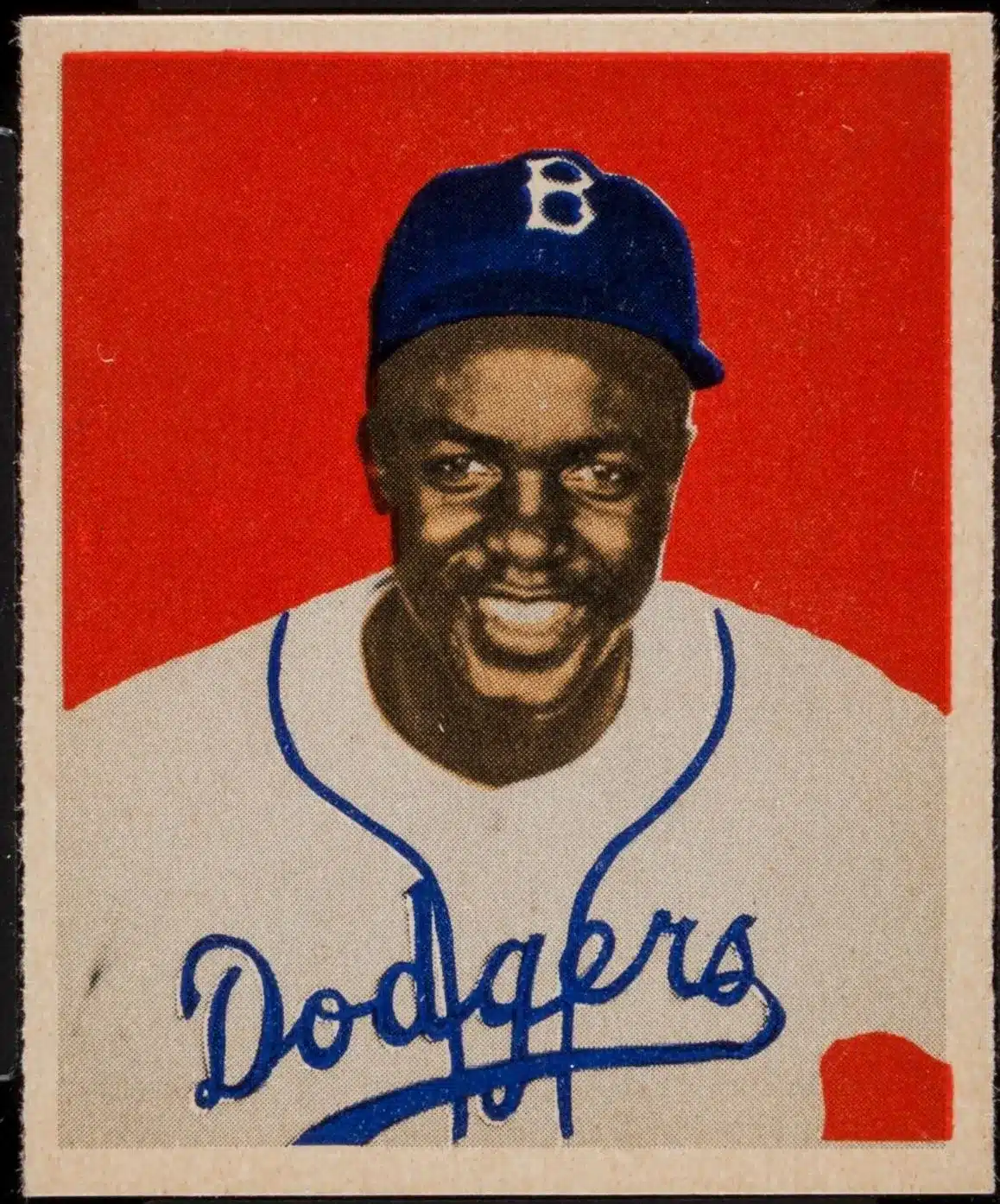
This theory is widely disputed because Wagner did, in fact, use tobacco products. His 1948 Leaf baseball card, which features Wagner later in life, even shows him with a mouthful of chewing tobacco.
Theory 2: Wagner Wanted to Be Paid for His Image
The second theory suggests Wagner may have been ahead of his time. He wasn’t getting paid for the use of his image on a baseball card, and he believed he should be compensated.
ATC didn’t pay the athletes featured in the T206 set, and Wagner was no exception. According to this theory, Wagner demanded that his printing plate be destroyed and no more cards be produced. ATC reportedly honored his request, ending production of the T206 Honus Wagner card.
More than a century later, the exact reason remains a mystery. What we do know is that the card’s extreme scarcity has helped make it one of the most sought-after baseball cards in history.
How Many T206 Honus Wagner Cards Exist Today?
The T206 Honus Wagner is one of the rarest baseball cards in existence. But just how many copies are still out there?
Have a collection you want appraised?
No sales motive, no consignments, no conflicts of interest. Just an independent valuation from Michael Osacky.
Estimated Surviving Copies
There are approximately 50 known graded copies of the T206 Honus Wagner. However, the exact number is difficult to determine because some cards have been crossed over from one grading company to another without the original company updating its population count. This means the same card may be counted more than once.
Collectors can consult PSA’s population reports to see how many examples have been graded, although these figures don’t necessarily reflect the number of unique surviving cards.
Condition: Why Most Known Copies Are Low Grade
Most known copies of the T206 Wagner are in low grade. Baseball cards weren’t collected as investments in the early 1900s, so they weren’t carefully preserved. There were also no modern ways to protect and preserve cards during baseball’s dead-ball era.
Additionally, these cards were issued inside cigarette packages without protective sleeves or cases. As a result, most cards in the T206 set are found in low grade, and the Wagner is no exception.
Ungraded and Undiscovered Copies
I get calls every week from people who believe they have an ungraded, or raw, T206 Honus Wagner. Unfortunately, every copy I’ve examined has turned out to be a reprint or fake.
However, genuine discoveries are still possible. In 2025, a previously ungraded T206 Wagner surfaced and was subsequently authenticated and graded PSA 1. The card was then sold through an online auction.
Hopefully, there’s another genuine, undiscovered Wagner just waiting to be found. After more than a century, that’s part of what makes this card so fascinating.
The Most Expensive T206 Honus Wagner Cards Ever Sold
With only about 50 known copies of the T206 Honus Wagner, some have developed fascinating histories of their own. From family heirlooms to celebrity collections, these cards have broken records and sold for millions.
- Price pending — PSA Authentic/Restored Wagner (2026): This Sweet Caporal Wagner has undergone restoration and is being offered through an online auction. Final sale price to be added after the auction closes.
- $5,856,000 — Piedmont Wagner, SGC Authentic (2026): One of only three known copies with a Piedmont advertising back, this card came with a 1958 letter valuing it at just $25!
- $3,599,000 — Garagiola Wagner, SGC Authentic (2026): Baseball legend Joe Garagiola reportedly traded his 1954 New York Giants uniform as part of the deal to acquire this card.
- $6,606,296 — SGC 3 Wagner (2021): One of the finest surviving examples, this card was discovered on Long Island in 1973 and originally sold for just $1,100.
- $5,124,000 — Shields Family Wagner, PSA 1 (2026): Reportedly pulled from a cigarette pack in 1909, this card remained in the same family for more than a century before selling at auction.
- $2,800,000 — Gretzky Wagner (2007): Once owned by hockey legend Wayne Gretzky, this famous copy became the first baseball card to sell for more than $1 million in 2000.
Nobody has ever lost money buying and then reselling the T206 Wagner card at any time in any grade.
Found a Honus Wagner Card? Here’s What to Do
Think you’ve found a T206 Honus Wagner? The easiest first step is to take clear pictures of the front and back of the card and send them to a professional sports card appraiser to help determine whether it’s authentic or a reprint.
There are a few common signs that your Wagner may not be authentic:
- A dollar value printed on the back: Many reprints include a dollar value. If your card says “$25,000” on the back, you know it’s not an authentic T206 Wagner.
- Bright white borders: If the borders are very white and don’t show signs of aging, you may have a reprint or counterfeit.
These are useful clues, but they aren’t definitive tests of authenticity. A professional examination is the best way to determine whether you have a genuine T206 Honus Wagner.
As PSA’s Lead Appraiser, I bring more than 30 years of experience in the sports collectibles hobby to evaluating rare baseball cards and memorabilia. I am also an ISA-accredited, USPAP-compliant appraiser specializing exclusively in sports cards and memorabilia.
If you’ve found a card you believe could be an authentic Honus Wagner, contact Baseball in the Attic to start the appraisal process.
Frequently Asked Questions About the T206 Honus Wagner
How much is a T206 Honus Wagner card worth?
An authentic T206 Honus Wagner card is worth approximately $2 million or more, depending on its condition, grade, and provenance. Some of the finest surviving examples have sold for more than $6 million at auction.
What is the most valuable baseball card ever sold?
The most valuable baseball card ever sold at public auction is the 1952 Topps #311 Mickey Mantle, graded SGC 9.5, which sold for a record-breaking $12.6 million in 2022.
What is the Gretzky T206 Wagner?
The Gretzky T206 Wagner is one of the most famous baseball cards in history. Once owned by hockey legend Wayne Gretzky, it was the first card ever graded by PSA and received a PSA 8.
However, the card has a controversial history. Auctioneer Bill Mastro later admitted to trimming its edges before it was graded. The card was reportedly oversized originally, allowing it to retain standard dimensions even after trimming.
How can I tell if my Honus Wagner card is real?
Look for common signs of a reprint or counterfeit, such as a dollar value printed on the back or unusually bright white borders. However, appearance alone cannot confirm authenticity. If you believe you’ve found a genuine T206 Honus Wagner, consult a professional sports card expert appraiser like Baseball in the Attic and consider submitting the card to a third-party authentication company such as PSA.