Whether you’ve inherited a family collection or spent decades building your own, there comes a time when you need to know its actual worth. Whether you’re insuring high-value items, making a charitable donation, or planning your estate, an independent sports memorabilia appraisal can provide the documentation you need to move forward with confidence.
In this guide, I’ll cover:
- What a sports memorabilia appraisal is
- How the appraisal process works
- When you need one
- How it differs from an auction house or card shop valuation
- What to expect from the finished appraisal report
Let’s jump in.
What Is a Sports Memorabilia Appraisal?
A sports memorabilia appraisal is a formal appraisal report written by a qualified USPAP-compliant appraiser. Appraisers of this level have dedicated their careers to the profession of appraising sports cards and memorabilia and have extensive expertise in authentication, market trends, condition, rarity, provenance, and comparable sales.
The value assigned to an item depends on the purpose of the appraisal. For example, an insurance appraisal uses replacement values—what it would cost to replace the item today—while an appraisal for estate planning, charitable donation, or divorce uses fair market values, or what the item would sell for between a willing buyer and seller not under duress.
Regardless of the assignment, every valuation is supported by market research, comparable sales, and objective analysis. The appraiser also signs a certification statement affirming there is no conflict of interest.
Professional Appraisal vs. Free Estimates and Online Price Guides
Not every opinion of value is an appraisal. While auction houses, local card shops, online price guides, and eBay sold listings can all provide useful information, they serve very different purposes. Understanding the differences can help you determine when a quick estimate is sufficient and when you need a formal, independent appraisal that will stand up to legal, tax, insurance, or financial scrutiny.
Auction House Estimates
Auction house estimates/free appraisals are NOT qualified appraisals.
For example, you walk into a baseball card show because you have a collection that you don’t know if it has value or not. The trading cards have been collecting dust in the junk drawer. You immediately see an auction house as you walk into the show. You present the person working the booth with your cards. After 60 seconds of talking with you and without doing any research, he tells you that your collection is $25,000. Of course, you are shocked and agree to consign your cards to this auction house. Unfortunately, the collection only sells for $5,000 at auction.
You have no recourse. The auction house provided you with a large number so you would immediately consign. The auction takes a percentage from both the buyer and the seller. They make money regardless of the final hammer price.
The verbal valuation that was provided to you is NOT an appraisal. Additionally, there is an inherent conflict of interest. The goal for the auction house is to accept as many consignments as possible. The more consignments, the more money the auction house makes.
Online Price Guides and eBay Sold Listings
eBay sold listings are a great starting point if you are trying to find the value of your trading cards. It’s vital that you click on “Sold Listings.” Otherwise, you will just see what people are asking, which is worthless information. We only care what items actually sell for. The same is true for real estate.
There are several limitations for eBay sold listings that you should be aware of:
- Your card might NOT be graded. You see a PSA 9 (very high grade) of your card and immediately assume your ungraded card must be valued in the same way.
- Authentication: There are lots of forgeries and reprints. It can be difficult to know if your card is original or not.
- If you have 1000 cards, it’s nearly impossible to look up all 1000 cards and correctly assess the condition to back into a dollar value for your collection.
- Sports Memorabilia, Autographs, etc: These items are not as plentiful as trading cards. Therefore, it might be very difficult to find these listed on eBay. Additionally, most autographs are not genuine.
Again, eBay sold listings are just a starting point. You can not use these values in a court of law or for tax purposes without a qualified USPAP-compliant appraiser.
Credentialed Independent Appraisers
A credentialed, independent appraiser provides something that auction houses, dealers, and online price guides cannot: an unbiased opinion of value with no financial interest in the outcome. Because they are not buying, selling, or consigning your collection, their only responsibility is to produce an objective, well-supported appraisal you can rely on for insurance, legal, tax, and financial purposes.
Credentials Matter. The International Society of Appraisers (ISA) is the gold standard for the Uniform Standards of Professional Appraisal Practice (USPAP). All ISA appraisers must sign a certification statement for each appraisal report. One of the most important statements that each person signs off on is that they have no conflicts of interest and that their fee is not based on a predetermined or pre-arranged value.
When Do You Need a Sports Memorabilia Appraisal?
You may need a sports memorabilia appraisal anytime an independent, documented opinion of value is required for legal, financial, tax, or insurance purposes. Some of the most common situations include:
Estate Planning and Inheritance
Families that own a sports card or sports memorabilia collection should obtain a formal appraisal. It’s much easier to have the collection appraised before somebody dies than after.
Emotions can run high after death, and there might be many people with different ideas on how to split up the collection. Having the formal appraisal conducted in advance of an event ensures your CPA and family members know what the value is and what the next steps are.
Insurance Coverage
Do you have a sports card or sports memorabilia collection that is worth $100,000 or more? If so, you should get your collection formally appraised for insurance purposes. There are inferior insurance agencies that do not require a formal appraisal report for them to insure your collection.
These insurance rates are generally lower because the insurer is looking for volume rather than quality. You gladly pay your insurance premium, but if there is an insurance claim, you may be out of luck because there was no formal appraisal report. When you pay for a formal appraisal report from a USPAP-compliant appraiser, the insurance agency accepts this without asking you any additional questions or for any additional documentation. If there is an insurance claim in the future (water, fire, theft, damage, etc), the insurance company will pay you quickly without any issues.
As with any market, the prices can move up or down. The modern trading card market is more volatile than the vintage trading card market. All sports appraisals should be reviewed every 2-3 years to update the values as needed. This allows you to get the maximum payout in case of an insurance claim.
Retail Replacement Values (RRV) are the values used for ALL insurance appraisals. These values are slightly higher than the auction values. RRV values are higher because the client has to be properly compensated in the case of a future insurance claim.
Charitable Donation
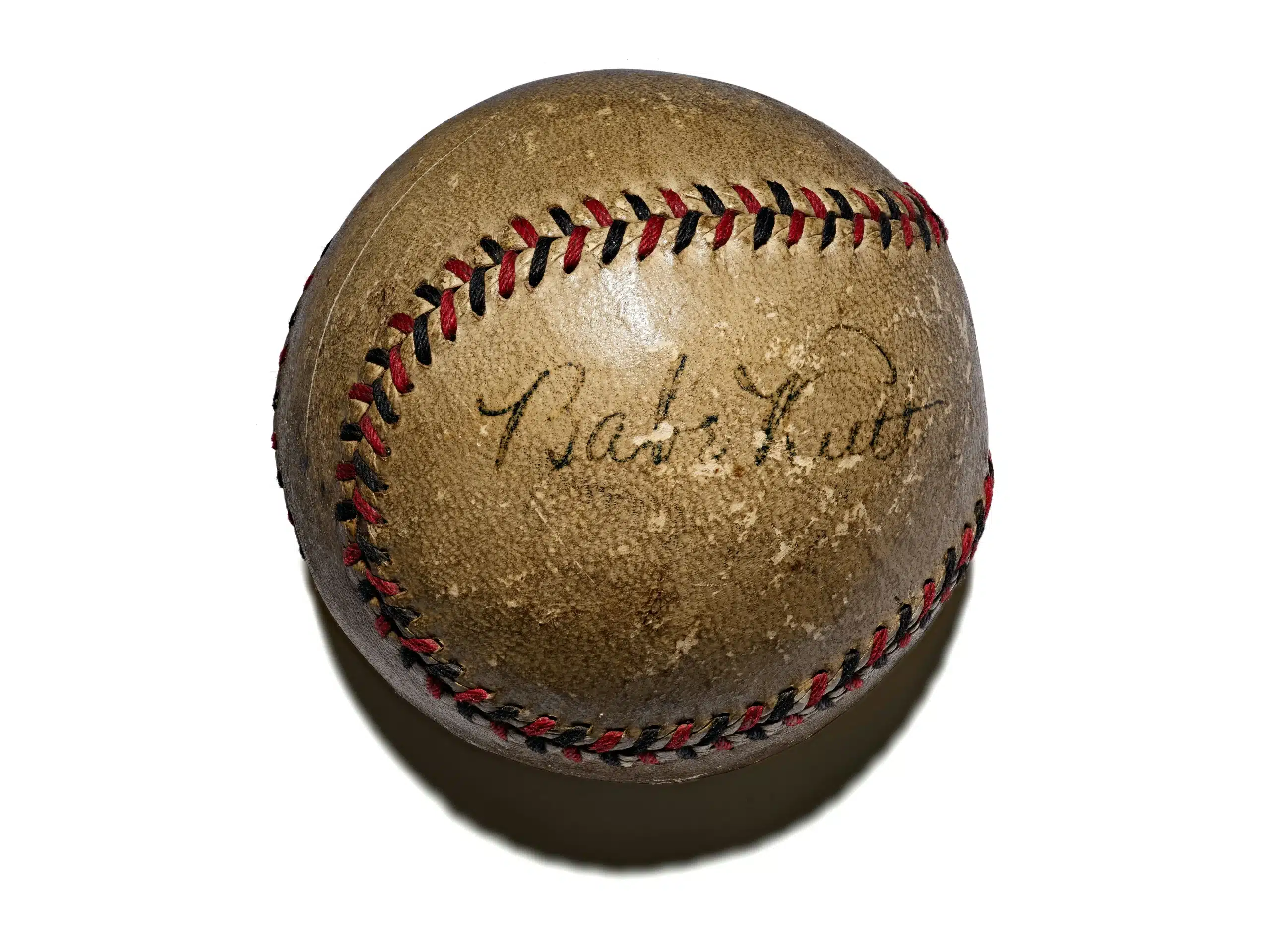
Not everybody wants to sell a PSA graded vintage card, game-used jersey, Babe Ruth autograph, or football game suite tickets. Sometimes people want to donate an item to a museum or a non-profit entity.
For the owner to qualify for a non-cash charitable donation, the IRS requires a USPAP-compliant appraiser to prepare a formal appraisal report and assign a value to each item. (NOTE: Dealers, auction houses, or local card shops are not USPAP compliant.) The appraiser writes the formal appraisal report and signs off on the IRS Form 8283. This IRS Form 8283 is then submitted with the donor’s taxes to qualify for the charitable tax deduction.
Divorce and Equitable Distribution
In the last 8-10 years, the sports collectibles market has raced higher. These collectibles are now viewed as an alternative asset. Vintage cards, modern cards, rookie autograph patch (RPA) cards, and autographs are highly desirable.
During divorce proceedings, sports collectibles are highly reviewed because each side wants them valued in a way that benefits them. In many cases, the sports card/memorabilia collection is worth more than the home that the couple lives in. The attorneys/court will require a USPAP-compliant sports appraiser to review the collection.
Sale or Consignment Preparation
I still frequently see people who walk into a card show to ask dealers and auction houses what their collection is worth. Whatever the answer is, there are conflicts of interest in whatever answer you receive. It’s always best to be “armed and dangerous” before approaching a dealer or auction house. Make sure to obtain a formal appraisal report before walking into a card show or local card shop.
What Does the Appraisal Process Look Like?
As the Lead Appraiser at PSA and an ISA-accredited, USPAP-compliant appraiser, I’ve spent more than 30 years helping collectors understand the true value of their sports cards and memorabilia. Whether I’m appraising a single high-value card or an entire estate collection, I follow the same process to ensure every appraisal is accurate, well-supported, and tailored to the client’s specific needs. This is what the appraisal process looks like:
1. Initial Consultation
A lead will come through via email or phone. Before accepting any appraisal assignment, I always ask the client to send photos of a few representative items. This allows me to make a preliminary assessment and determine whether a professional appraisal makes financial sense for the client. I never want to charge an appraisal fee that exceeds the value of the item or collection.
2. Collection Review and Evaluation
After I review the pictures and inventory list, I will call the client and ask a few questions to make sure I am clear on what it is I am asked to appraise. I will also want to know what the objective is (insurance, donation, divorce, estate planning).
3. Research and Comparable Sales
Comparable sales are great, but a lot of what I appraise have zero comparables available. However, there might be “like” comparables of similar players in similar condition that might have sold in the last 6-12 months.
4. The Appraisal Report
I prepare a formal appraisal report based on the client’s objective. This report is typically delivered by email 30 days after the onsite inspection. (Can be quicker based on objective and urgency.)
What Does a Sports Memorabilia Appraisal Cost?
The cost of a sports card or sports memorabilia appraisal is largely dependent on the number of items that need to be formally appraised. The cost is NOT dependent upon value. In fact, high-value cards that are PSA-graded have bracketed values and don’t take much time to appraise. Whereas large collections that are not graded or authenticated and are located in several different locations might take a long time to appraise. After receiving pictures and an inventory list (if available), I provide the client with an estimated cost for the appraisal.
Why Collectors, Families, and Advisors Choose Baseball in the Attic
When you’re making important financial, legal, or estate decisions, you need an appraiser you can trust. For more than 30 years, I’ve helped collectors, families, attorneys, financial advisors, museums, and institutions understand the true value of sports cards and memorabilia through objective, well-supported appraisals.
Here’s what sets my appraisal practice apart:
- Independent and unbiased. I don’t buy, sell, broker, or consign sports collectibles, so there are never any conflicts of interest.
- Credentialed expertise. I’m an ISA-accredited, USPAP-compliant appraiser and the Lead Appraiser at PSA (Professional Sports Authenticator).
- Decades of experience. I’ve spent more than 30 years evaluating sports cards and memorabilia across all major sports.
- Personal service. Every appraisal is completed by me—never a junior appraiser or outsourced team member.
- Ethical pricing. My appraisal fees are never based on the value of your collection.
- Trusted nationwide. I work directly with collectors, families, attorneys, financial advisors, nonprofits, museums, and institutions across the United States.
Ready to Learn What Your Collection Is Worth?
Whether you have a single item or an entire collection, I’m happy to review your inquiry and let you know whether a professional appraisal is the right fit. Every inquiry is reviewed by me personally, and there’s no cost to get started.